Worried your camera won’t survive the trip? Here is how to pack camera gear for travel: keep the body, lenses and spare batteries in a padded carry-on, and pad everything that must ride in a hold or a pack.
This guide is part of our travel photography tips series.
| Item | Rule of thumb |
|---|---|
| Spare lithium-ion batteries | Carry-on only |
| Rechargeable batteries rated 0-100 Wh | Allowed on passenger aircraft |
| Batteries rated 101-160 Wh | Need airline approval; two spares per person |
| Batteries above 160 Wh | Forbidden on passenger aircraft |
| Watt-hour formula | Volts x amp hours (mAh divided by 1000 first) |
Figures come from the FAA’s passenger battery guidance and the TSA’s lithium battery page. Rules can change and airlines can add their own, so check both sources and your airline before you rely on them.
Start with a bag built for the job
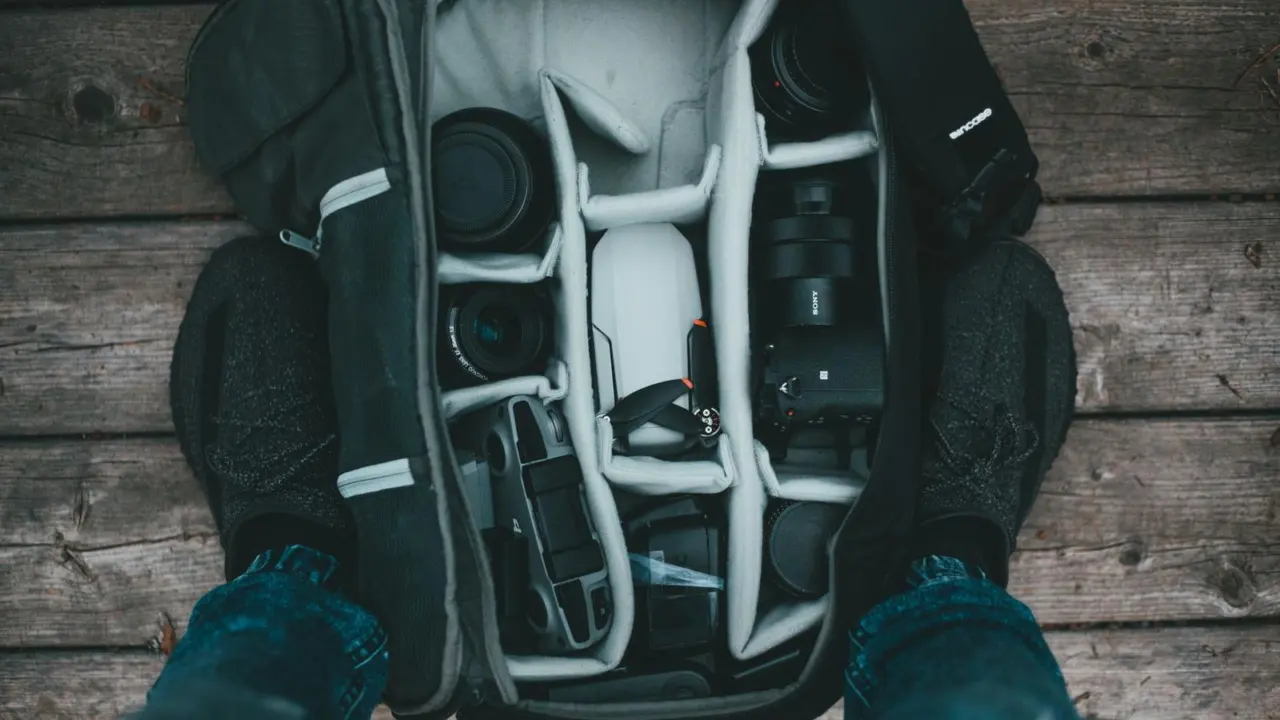
A good camera bag has adjustable padded dividers that hold each piece snugly. Nothing should be able to slide, knock against glass or press on a lens mount.
You have two broad choices:
- A dedicated camera backpack: best for flights and hikes, because it spreads weight across your shoulders and often has side access.
- A padded insert inside a normal pack: cheaper and less conspicuous, but you must still stop the insert from shifting.
- A hard case: the most protective for rough transport, though heavy and bulky on a trail.
Whatever you pick, pack it the way you will carry it. Load it fully at home and walk around, so you find pressure points before the airport does.
Packing order inside the bag
Heavy items go close to your back and low in the bag, so the load does not drag you backward on a climb. Lenses stand upright or lie flat in their own compartments, with caps on both ends.
- Remove the lens from the body if the bag is going to be squeezed, and fit the body cap.
- Place the body in the centre divider, screen facing inward.
- Stand lenses in separate slots, the heaviest nearest your back.
- Put filters, cleaning cloths and memory cards in a small pouch at the top.
- Leave a little spare room so you can add a jacket or snacks without crushing a divider.
If you are still choosing what to bring, our guide to the best lens for travel photography can help you carry fewer, better lenses.
Flying with camera gear: batteries and carry-on rules
The TSA states that spare (uninstalled) lithium ion and lithium metal batteries must be carried in carry-on baggage only. That covers power banks too, so none of your spares belong in a checked bag.
The FAA says rechargeable batteries rated 0-100 Wh are allowed on passenger aircraft, while those rated 101-160 Wh require approval from the air carrier, and batteries above 160 Wh are forbidden. Most camera batteries sit well under the lowest limit, but large external power packs and some video batteries can approach it.
To check a rating, multiply volts by amp hours. If the label shows mAh, divide by 1000 first and then multiply by the volts.
- Keep each spare battery in its own case or a plastic bag so the terminals cannot touch metal.
- Never travel with a damaged or swollen battery.
- Carry chargers and cables in your cabin bag as well, in case your luggage is delayed.
- Keep the bag in reach so a security officer can inspect it quickly.
The FAA also notes that bags with installed batteries must be carried as carry-on bags unless the batteries can be removed from the baggage. Never pack a camera in a checked suitcase if you can avoid it: baggage handling is rough, and theft is a real risk.
Protecting gear against knocks, damp and dust
Camera bags are padded against bumps but rarely sealed against weather. A rain cover stored in the bag’s bottom pocket costs little and weighs almost nothing.
Add a few simple extras:
- Silica gel packets in the bag to limit moisture, especially in humid climates.
- Zip-top bags for each lens on wet trails, so condensation stays outside.
- A blower and microfibre cloth for dust, kept in a side pocket.
- Lens hoods fitted when carrying, which add a layer of physical protection.
When moving from a cold place into a warm one, leave the gear sealed in the bag for a while. This lets it warm slowly, so condensation forms on the bag and not on the glass.
Packing for hikes
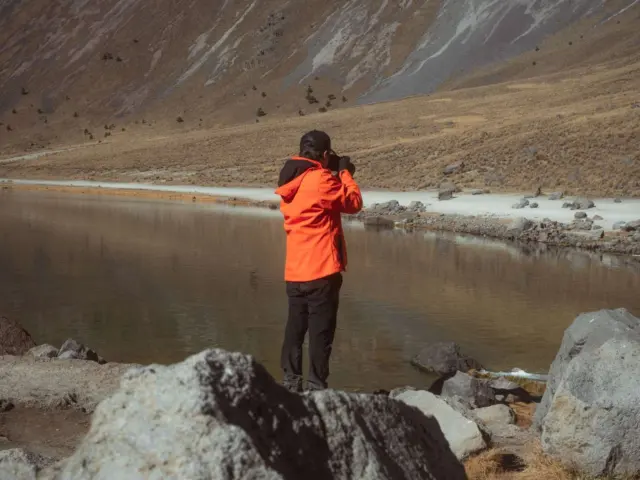
On a trail, accessibility matters as much as protection. If your camera is buried at the bottom of the pack, you will miss shots, so keep your most-used body and lens in a quickly reachable spot.
A chest-mounted holster or a clip strap keeps the camera ready while leaving your hands free for poles. Bring just the lenses you will actually use that day, and leave the rest at your lodging.
Timing also affects what you carry. If you plan to shoot at dawn or dusk, our notes on golden hour travel photography explain why a tripod and a headlamp are worth the weight.
Before a long hike, back up your cards where you can, and carry spare cards in a small hard case rather than loose in a pocket. Pack the battery you need and keep a spare warm in an inner pocket, since cold drains charge faster.
Security, insurance and a final check
Keep a list of serial numbers and photos of each item, stored in the cloud as well as on your phone. It helps with insurance claims and with recovering lost items.
Before you leave for the airport or trailhead, run through this quick list:
- Batteries charged, spares in protective cases and in your cabin bag.
- Cards formatted and backed up.
- Lens caps and body caps on.
- Rain cover and cleaning kit packed.
- Airline battery policy checked on the day you fly.
Do not leave a camera bag unattended in a café, taxi or hostel. Use a lockable zip, keep the bag between your feet, and avoid advertising expensive gear with a bright brand strap.
Frequently asked questions
Can I put my camera in checked luggage?
Show answer
You can, but it is risky because of rough handling and theft. Keep the camera and lenses in your cabin bag, and remember that spare lithium batteries must not go in the hold.
Do I need to take spare batteries out of the camera bag at security?
Show answer
Rules vary by airport, so be ready to show them. Keep spares in protective cases where an officer can reach them easily.
How do I work out my battery’s watt-hour rating?
Show answer
Multiply volts by amp hours. If the label shows milliamp hours, divide by 1000 first, as the FAA explains.
Should I use a hard case or a backpack?
Show answer
A padded backpack suits most travellers and hikers. A hard case protects better in transport but is awkward on a trail.