Nervous about pointing a lens at strangers abroad? Here is how to photograph people while traveling: ask first when you can, smile, explain yourself, show the result and accept a no gracefully.
This guide is part of our wider series on travel photography tips.
| Situation | What the sources suggest |
|---|---|
| Default approach | When possible, always ask permission |
| No shared language | Smile and point to your camera |
| Children | Ask permission from the parents |
| Popular tourist destinations | The person may want money |
| Explaining your reason | Tell them why you want the photo |
Figures and advice can change, and customs differ by place: check the sources, Digital Photography School and National Geographic, before you rely on them.
How to photograph people while traveling: why asking first matters
A portrait is a small exchange between two people. If the person feels like a specimen, you will see it in their face, and so will everyone who looks at the picture.
Digital Photography School admits that approaching total strangers is hard, and says that when possible you should always ask permission. National Geographic gives similar advice: ask permission to shoot when it feels appropriate.
Asking has a practical payoff too. People who have agreed to be photographed relax, look at you, and let you work the scene instead of grabbing a rushed frame.
How to ask when you share no language
You do not need fluent phrases. A calm approach does most of the work.
- Smile first. Make eye contact before you lift the camera, and keep the camera visible and low.
- Point to your camera. According to Digital Photography School, smiling and pointing to your camera normally does the trick, even when the person does not speak your language.
- Give a reason. National Geographic’s author describes explaining to a confused couple that they were handsome and the car was wonderful. A genuine compliment travels well.
- Wait for a clear yes. A nod, a smile or a pose counts. Hesitation, a turned shoulder or a raised hand does not.
- Say thank you. Learn that one word in the local language before you arrive.
A guide or a translator can help too. Digital Photography School notes they are useful both for asking and for advising where you should not photograph at all.
Good moments to start a conversation
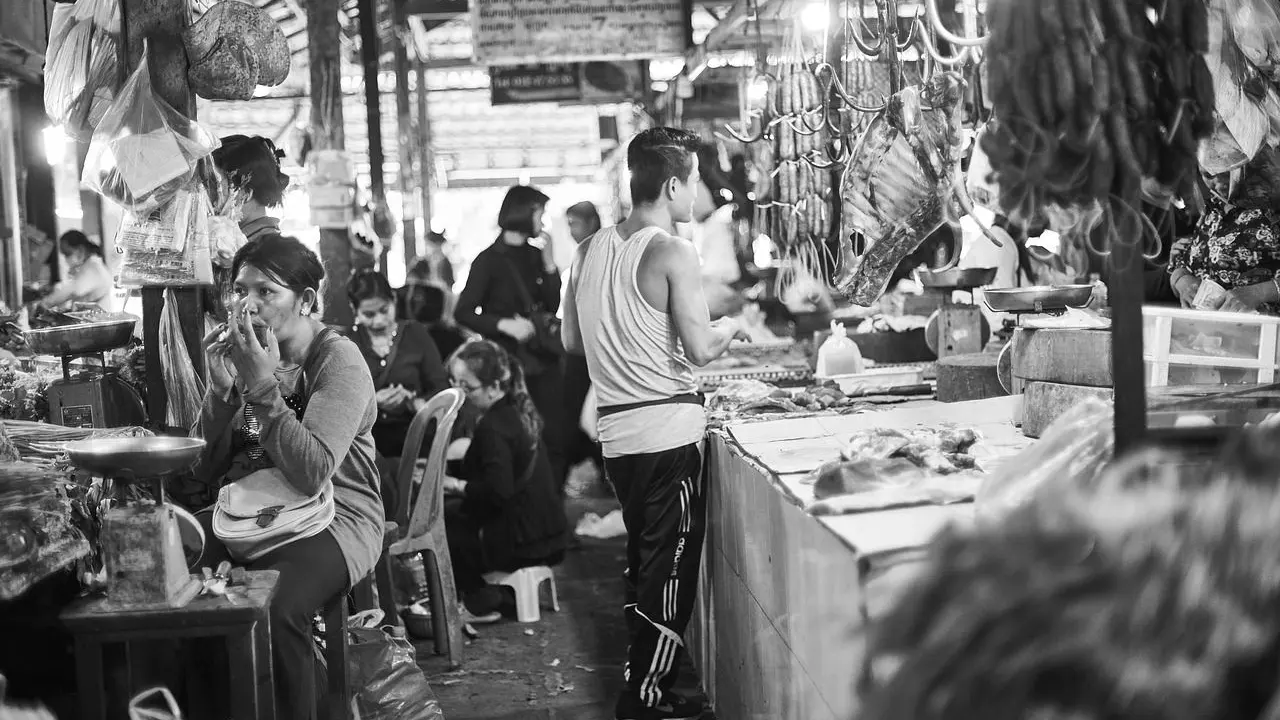
Some situations make the first step easier. Buying something is the best example: the source says that when you are purchasing something from a person, it is one of the best times to photograph them, as they are usually amicable.
Other openings include:
- A market stall after you have bought fruit, tea or a snack.
- A craftsperson at work, where you can ask about the craft first.
- A guesthouse host or tour guide you have already spent time with.
- Someone who has noticed you and smiled.
Talking before shooting also gives you a story. The more you learn about a person, the better you can frame them with the tools of their trade around them.

Showing people in context
Context turns a face into a person with a life. It also gives you something to talk about before you raise the camera: the stall, the tools, the street behind them.
Environmental portraits add context to the person by showing more of their surroundings, so the viewer learns something about who they are. A baker beside the oven says more than a face against a blank wall.
Use the same habits you apply to landscapes. Our notes on travel photography composition tips cover framing, leading lines and layering, all of which work well around a person.
Once someone has agreed, Digital Photography School suggests you do not hesitate to direct them: where to stand, where to look. Keep directions gentle, and take a few frames rather than dozens.
After dark, portraits get harder because light is low and people are tired. Our guide to night photography while traveling covers the technical side, but the same rule applies: ask first.
Children, money and saying no
Three situations call for extra care.
- Children: any time you are photographing children, ask permission from the parents, as Digital Photography School advises.
- Money: in popular tourist destinations it is common for the person you are photographing to want money. Decide beforehand whether you will pay, and be consistent.
- Refusals: if someone says no, lower the camera, smile and move on. No picture is worth making someone uncomfortable.
Showing people the image on your screen afterwards is a friendly habit. It turns the moment into a trade rather than a taking, and if they dislike it, you can delete it on the spot.
Local rules also vary. Some places restrict photographing certain people, religious sites or officials, so ask your host or guide before you shoot.
Gear and habits that keep people at ease
Big lenses and bulky bags can make an encounter feel like an inspection. A small camera or a modest lens keeps the mood light and lets you stand close enough to chat.
Think about what you carry and how you move:
- Set exposure and focus before you approach, so you are not fiddling while someone waits.
- Choose a natural focal length that lets you talk at normal distance rather than lurking far away with a long zoom.
- Turn off flash, beeps and bright screens where you can.
- Keep your shoulders relaxed and your pace unhurried.
Good light helps too. Soft morning or late-day light flatters faces, and open shade near a doorway or awning avoids squinting and harsh shadows.
Thinking beyond the single frame
A good portrait often grows from a short relationship. Stay a while, buy a cup of tea, ask about the place, and let the person get used to the camera.
Many photographers also keep a note of names and places, which makes it easier to send a print or a digital copy later if the person wants one. Only promise what you will really do.
Think about how you will caption and share the image, too. Use a name if you were given one, describe the place accurately, and avoid captions that reduce someone to a stereotype or a costume.
A simple routine you can repeat
Having a routine helps if you are shy. Try this on your next trip.
- Watch the scene for a few minutes before you do anything.
- Make eye contact and smile.
- Point to your camera with a questioning expression.
- Take a few frames, then show the screen.
- Thank them, and offer to share the photo if there is a way to do it.
Over time the nerves fade, and you will find that most people are more generous than you feared. The photos improve because the encounters do.
Frequently asked questions
Do I always have to ask before photographing someone?
Show answer
Digital Photography School says to ask permission when possible. In a wide street scene where nobody is the subject, many photographers do not, but a close portrait is different, and local laws and customs vary.
What if we don’t speak the same language?
Show answer
Smile and point to your camera. The same source says this normally works even when the person does not speak your language.
Should I pay people for a portrait?
Show answer
It is a personal choice. In popular tourist destinations people often expect money, so decide in advance and stay consistent.
Can I photograph children?
Show answer
Ask the parents first. If they decline, respect that.